- Delivery Method Online
- Professional Certificate
- 24hrs Suggested Study Time
- 3 Months Access
- Tutor Support
- Study On Any Device
- 3349 Students
Purchasing Essentials

Now Only
$389
AUD
35% off
$599 AUD
Quick Facts
Improve your company's bottom line by mastering the fundamentals of purchasing.
Discover and master the fundamentals of purchasing by understanding your strategic and tactical roles as a purchasing practitioner. Improve your company's bottom-line profitability by learning and implementing key concepts such as negotiation, supplier sourcing and qualification, outsourcing and make-or-buy analysis. Learn the basics of supplier partnerships, capital budgeting and green buying.
In this self-paced online course, you will learn how to define internal customer needs, generate purchase requisitions and purchase orders, expedite, trace and receive supplier deliveries, maintain effective purchasing records and create and manage various purchasing budgets. I will help you learn about business law, contracts, leasing, Six Sigma and total quality management (TQM). You will learn how to recruit, select and evaluate purchasing personnel, and learn the importance of business ethics.
Courses are delivered to you through expertly executed lessons, online instruction and interaction with like-minded students. Our courses are designed to deliver all of the benefits of studying in a classroom whilst giving you the flexibility to study at a time and place to suit your needs. You can access your classroom 24/7 from any device with an internet connection.
This course has a 3 month duration. You'll complete comprehensive lessons, quizzes and assignments before submitting your final exam at the end of the course to achieve your certificate. Courses must be completed within the 3 month access period.
In this first lesson, you'll learn about the various types of professional purchasing certification, including those offered by the Institute for Supply Management (ISM) and the National Institute of Government Purchasing (NIGP). We'll explore the breadth of the purchasing body of knowledge and identify several areas where purchasing provides value to organizations. You'll also discover the significance of buying on a total cost basis and learn how savings you generate for purchased materials and services improve your company's bottom-line profitability.
Today, you'll learn how to set a vision and mission statement, and how to develop objectives and strategies. We'll also discuss the mechanics of creating purchase requisitions and purchase orders and how to use them effectively. We'll finish up by exploring different conditions that benefit from negotiation and the steps and techniques that contribute to a successful outcome.
All organizations use a purchasing cycle to manage buying activities. To help you effectively manage purchasing activities, this lesson presents a seven step-cycle that begins with need recognition and ends with receipt of delivery. We'll discuss the first five steps in depth, and see how specifications, branding, and samples are three common methods for defining user needs. You'll also learn about four different forms of competition (monopoly, oligopoly, full competition, and perfect competition) and see how competition affects prices.
In this lesson, we'll conclude our exploration of the purchasing cycle by discussing steps six and seven (perform follow-up and receive the delivery). Then we'll examine expediting, follow-up, and tracing as methods to enhance on-time deliveries. You'll also learn how purchasing supports the receiving function and discover the underlying concepts of make or buy and leasing.
As a purchasing professional, you depend on your suppliers. After all, without capable suppliers, it would be very difficult (if not impossible) to meet your organization's needs. So today we'll discuss the importance of proper source selection, and how to prepare a prospective supplier list. You'll find out how to evaluate each supplier-sourcing element and determine when to conduct a supplier visit.
Green buying is an extremely important organizational concept. Firms that use it successfully achieve internal objectives and also satisfy societal goals. In this lesson, we'll discuss the purpose of green buying and review its 3Rs (reduce, reuse, and recycle). To help you locate historical information when you need it, we'll investigate the various types of purchasing records and discuss electronic record keeping and reporting. You'll also learn all about competitive bidding and understand how to use a request for quotation (RFQ) or a request for proposal (RFP).
In today's lesson, we'll discuss important legal matters that purchasing professionals encounter daily. We'll begin by looking at business law and then move on to talk about contracts. You'll learn about the principal-agency relationship and the four major forms of organization (sole proprietorships, general partnerships, limited partnerships, and corporations).
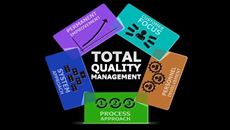
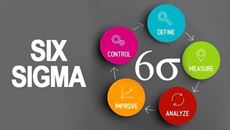
Suppliers rely on manufacturing and quality systems. Purchasing professionals need to know about these systems because their use (successful or unsuccessful) highly influences suppliers' abilities to fill your purchase orders on-time, with quality, and at a desirable price. Today, we'll look at Six Sigma and Total Quality Management (TQM), and identify how these philosophies and methodologies benefit organizations. You'll learn about the elements of a supply chain, Manufacturing Resource Planning (MRP II), and Enterprise Resource Planning (ERP).
Purchasing, as a major organizational function, is involved with a number of different types of budgets. These budgets include the purchasing department administration budget (also known as an expense budget), the production materials budget, and the maintenance, repair, and operating (MRO) budget. To use budgets wisely, you need to know how they work, what they are supposed to accomplish, and how they are constructed. In this lesson, you'll discover the primary purposes, advantages, and disadvantages of budgets. We'll cover how to select a budget period, review variable budgets, and understand budget variances.
For many organizations, capital expenditures represent the largest disbursement of funds. And purchasing practitioners play a number of roles in capital budgeting including assisting with requests for capital expenditures, serving on capital budget evaluation committees, and leading teams to acquire capital assets. Today's lesson will help you effectively participate in these activities. You'll learn the definition of capital budgeting, understand the initiation process for capital request proposals, and examine different justification methods for project proposals.
A supplier partnership is a fairly recent type of arrangement. It characterizes a progressive way for sellers and buyers to work together. Supplier partnerships require an extensive amount of preparation and commitment, but the payoff is substantial for firms that succeed. Today, we'll discuss the prerequisites and elements of a supplier partnership. We'll also explore ethics and organizational politics and study their effects on purchasing practitioners.
In our final lesson, you'll discover how to recruit, select, and evaluate purchasing personnel. Then you'll learn how to implement a performance planning process, including administering performance reviews. And finally, you'll find out why so many people dislike giving performance reviews and get tips on how to make your reviews more meaningful.

Tony Swaim
Tony Swaim has helped many clients, colleagues, and students reach their professional and personal goals. He has been an online instructor since 1998 and has taught at colleges and universities across the United States since 1981. His focus areas ... Read more
Read Tony Swaim's ProfileFrequently Asked Questions
Once you've made the payment, we'll send you a confirmation email with a link to start your course. Feel free to get started whenever you're ready!
You'll have 3 months access to your course. In that time you are free to study at your own pace. The course duration is 24 hours.
Online learning is a flexible way to study that fits around your schedule, giving you the freedom to learn at your own pace from anywhere in the world. You'll have 3 months to complete the course and can take the multiple-choice questions and final exam whenever it suits you.
If you need help, you can contact us anytime. You can also join the discussion area where you can interact with other students. The discussion area for each lesson is open for the entire duration of the course.
Of course! We offer a 7-day money back guarantee. As long as you haven't completed the course, you can get a full refund within 7 days of enrolling.
We do not offer extensions or transfers for this self-paced course. However, you will have 3 months to complete the course, and if you need to cancel within the first 10 days of enrolment, we offer a money back guarantee.
What people are saying about our courses
The Learning Environment
From the moment that you enrol in the Purchasing Essentials you will become an integral part of our learning community. You'll find yourself with the freedom to learn at a speed that suits you, on any device, from anywhere in the world. Achieving your career goals no longer has to mean compromising family and work commitments.
Ready to get started?
Enrol NowOur Values
Learn At Your Own Pace
We believe in personalised learning. That's why we provide all the tools and support you need to succeed at your own pace. With flexible learning, you'll stay motivated and retain more information. Plus, you can balance your studies with work and family commitments to make your dreams a reality.
We Won't Break The Bank
Education should be accessible to anyone who wants to learn. That's why we offer some of the most competitive prices in the industry with payments plans for just $25 per week. Investing in your future is a smart choice and doesn’t have to break the bank.
Industry-Led Courses
There's no better way to learn than from experts with years of experience in your field. That's why each of our 200+ industry-led courses are designed to give you a real-life perspective on your industry. With our expert mentors, you'll learn from people who have a wealth of knowledge and experience, and who are passionate about sharing it with you.
Get The Personal Support You Deserve
At Vibe Learning, we're real people who are dedicated to providing you with personal support every step of the way. Our industry experts are not only professional and knowledgeable but also incredibly passionate about sharing their expertise with you. With their guidance, you'll gain invaluable insights and practical knowledge to help you succeed.
Still looking?
Check out the following courses related to Purchasing Essentials: