Manufacturing Fundamentals

Picture of Manufacturing Fundamentals
Now Only
$389
AUD
35% off
$599 AUD
Quick Facts
  • Delivery Method Online
  • Professional Certificate
  • 24hrs Suggested Study Time
  • 3 Months Access
  • Tutor Support
  • Study On Any Device
  • 795 Students

Learn the basic skills required to work in the manufacturing field.

Learn the basic skills required to work in the manufacturing field. Discover the role of production design, process planning, and the heart of 13 different manufacturing processes. Understand why facility location and plant layout decisions are so vital and learn how job design helps you accomplish company goals and achieve worker satisfaction. Find out what makes up the physical work environment and learn how to characterise different types of production materials. Master product development concepts such as the voice of the customer (VOC), quality function deployment (QFD), and failure mode and effects analysis (FMEA). Learn how performance measurements and standardisation improve manufacturing operations.

In this instructor-facilitated online course, you will learn how successful organisations use costs to communicate manufacturing progress and how to effectively develop short and long-term budgets. Also, you will discover how the application of technology turns an ordinary company into a high-performing organization. You will also find out how ISO 9000 and enterprise resource planning (ERP) make the most of a manufacturer's potential.

Courses are delivered to you through expertly executed lessons, online instruction and interaction with like-minded students. Our courses are designed to deliver all of the benefits of studying in a classroom whilst giving you the flexibility to study at a time and place to suit your needs. You can access your classroom 24/7 from any device with an internet connection.

This course has a 3 month duration. You'll complete comprehensive lessons, quizzes and assignments before submitting your final exam at the end of the course to achieve your certificate. Courses must be completed within the 3 month access period.

To make sure we get off to a good start, we'll begin this first lesson by defining manufacturing—looking at its history, identifying the various types of industries, and discussing different types of products. We'll survey the critical areas of design, materials, processes, technology, and systems. Then, we'll finish up by examining manufacturing capability, trends in the field, and manufacturing careers.

Production design is a critical activity for any manufacturing firm because it plays a major role in defining overall costs. Once a production design is set, it charts the course for a product. Even the most expensive equipment and the best engineers can't offset the limitations of a production design. Today, we'll examine the elements of production design and process planning. Then, we'll explore the vast number of processing types including metal casting, bulk deformation, sheet metal forming, material removing, polymer and plastic processing, rubber production, glass manufacturing, powder processing, surface processing, joining and fastening, electronics assembly, and chemical processing.

Before you can manufacture anything, you need some land, a building, and a layout. Your decisions about these elements are extremely important, especially the first two. Once you buy land and erect a building, it's usually too late to change your mind without incurring a stiff penalty. So, in this lesson, we'll explore the ins and outs of facility selection and layout. We'll begin by discussing the influence of forecasting, long-range planning, and capacity planning. Then we'll identify the numerous factors you need to consider for a general and specific location and look at a way to evaluate them. We'll also examine plant layout and review a few options for it.

Our topic today is job design. Job design has changed dramatically over the years and the majority of manufacturing jobs now combine human labor and machines. While a few positions such as assembly or heavy labor may not involve equipment, it's difficult to think of work that doesn't involve mechanical aids or tools. We'll discuss how job design is made up of job content and work methods and how jobs relate to each other. You'll find out how machines relate to human beings, and also how an operation chart helps define the steps a worker takes to complete a job. Then, we'll finish up with a discussion about work teams and a matrix organization, and see how job enlargement and job enrichment increase employee satisfaction.

Today, we'll add another essential layer to our manufacturing picture: how to create an effective and productive physical work environment. The physical work environment includes temperature, humidity, airflow, noise, lighting, and levels of contaminants (hopefully low). It plays a major role in worker well being and productivity. We'll examine the elements of a manufacturing work environment starting with the physical building and moving on to temperature, humidity, airflow, and noise. We'll also talk about lighting, contaminants, and hazards. Then, we'll close with a general look at safety and the elements of an effective safety program.

If you let your imagination run wild, you can probably think of hundreds, perhaps thousands of manufacturing materials. At the companies I've worked for, we've used latex rubber, electronics, sheet metal, wood, human plasma, seaweed, titanium wire, and alligator blood. That's some list! We won't be able to look at all materials, but, in this lesson, we'll cover the basic ones—metals, ceramics, polymers, and composites. We'll start by discussing the nature of materials. Then, we'll move on to their mechanical and physical properties and talk about dimensions, tolerances, and surfaces.

New products are the lifeblood of manufacturing organizations. But did you know that it takes more than 50 new product ideas to generate a single successful one? Unfortunately, most new products don't satisfy customer or company objectives. A major reason new products don't succeed is because they aren't marketed well. Today, we'll make sure this doesn't happen to you. We'll delve into the concept of customer orientation, starting with a brief overview of marketing. Then, we'll explore the voice of the customer (VOC). And finally, you'll see how failure mode, effects analysis (FMEA), and project management can lead to success.

Cost is the price you pay to acquire, maintain, produce, or use materials or services. Since most firms account for their operations at cost, it's vital that you understand how costs are determined and used. In this lesson, we'll examine many different types of costs including discretionary, relevant, variable, and standard. After we finish exploring these costs, you'll see how manufacturers reflect them in their accounting systems.

Today, we'll look at investment decisions for items such as equipment and fixture purchase and replacement. We'll also spend some time on budgeting. We'll discuss the different types of investment decisions, including average rate of return (ARR), payback period, discounted cash flow (DCF), net present value (NPV), and internal rate of return (IRR). After we work through a few problems, we'll discuss the basics of budgeting.

In this lesson, we'll examine performance measurements as a way to keep track of progress. After all, you don't really know how your manufacturing operation performs unless you have an official scorecard. So, today we'll identify the attributes of effective performance measurements and look at a few traditional and progressive methods. Then, we'll wrap things up by addressing physical measurements.

Today is all about standards. They've been around for quite a few years, but it's just in the past few decades that they've stepped out into the spotlight, mainly because of the high profile of ISO 9000. We'll talk about how standards are used, identify where they came from, and discuss how they're developed. We'll also explore their benefits and discover how they're defined.

For our final lesson, we'll focus on technology. We'll look at a few specific technological advances, namely computer aided design (CAD), computer aided manufacturing (CAM), computer integrated manufacturing (CIM), flexible manufacturing system (FMS), and bar coding. Then, we'll close the course by looking at a powerful software package used by manufacturers around the world: enterprise resource planning (ERP).

Tony Swaim

Tony Swaim

Tony Swaim has helped many clients, colleagues, and students reach their professional and personal goals. He has been an online instructor since 1998 and has taught at colleges and universities across the United States since 1981. His focus areas ... Read more

Read Tony Swaim's Profile

Frequently Asked Questions

Once you've made the payment, we'll send you a confirmation email with a link to start your course. Feel free to get started whenever you're ready!

You'll have 3 months access to your course. In that time you are free to study at your own pace. The course duration is 24 hours.

Online learning is a flexible way to study that fits around your schedule, giving you the freedom to learn at your own pace from anywhere in the world. You'll have 3 months to complete the course and can take the multiple-choice questions and final exam whenever it suits you.

If you need help, you can contact us anytime. You can also join the discussion area where you can interact with other students. The discussion area for each lesson is open for the entire duration of the course.

Of course! We offer a 7-day money back guarantee. As long as you haven't completed the course, you can get a full refund within 7 days of enrolling.

We do not offer extensions or transfers for this self-paced course. However, you will have 3 months to complete the course, and if you need to cancel within the first 10 days of enrolment, we offer a money back guarantee.

The Learning Environment

From the moment that you enrol in the Manufacturing Fundamentals you will become an integral part of our learning community. You'll find yourself with the freedom to learn at a speed that suits you, on any device, from anywhere in the world. Achieving your career goals no longer has to mean compromising family and work commitments.

Ready to get started?

Enrol Now

Our Values

Learn At Your Own Pace

We believe in personalised learning. That's why we provide all the tools and support you need to succeed at your own pace. With flexible learning, you'll stay motivated and retain more information. Plus, you can balance your studies with work and family commitments to make your dreams a reality.

We Won't Break The Bank

Education should be accessible to anyone who wants to learn. That's why we offer some of the most competitive prices in the industry with payments plans for just $25 per week. Investing in your future is a smart choice and doesn’t have to break the bank.

Industry-Led Courses

There's no better way to learn than from experts with years of experience in your field. That's why each of our 200+ industry-led courses are designed to give you a real-life perspective on your industry. With our expert mentors, you'll learn from people who have a wealth of knowledge and experience, and who are passionate about sharing it with you.

Get The Personal Support You Deserve

At Vibe Learning, we're real people who are dedicated to providing you with personal support every step of the way. Our industry experts are not only professional and knowledgeable but also incredibly passionate about sharing their expertise with you. With their guidance, you'll gain invaluable insights and practical knowledge to help you succeed.

Frequently Asked Questions | Vibe Learning
 

What's Included in Our Courses?

  • Interactive Online Lessons
  • On Demand Video Tutorials
  • Downloadable Templates & Resources
  • Lesson Notes
  • Quizzes & Practical Tasks
  • Formally Graded Assessments
  • Lifetime Access
  • A Experienced Grooming Mentor
  • Personalised Feedback
  • 24 Hour Support
  • Membership to our Exclusive Dog Grooming Community
  • Professional Certificate Upon Completion
  • Internationally Accredited by ICOES

Frequently Asked Questions

Get quick and honest answers to our most common questions about our dog grooming courses. Whether you're seeking clarity on our services, exploring our courses or looking for guidance on our learning platform, this is your go-to resource.

Can't find the answer you're looking for? Don't hestitate to reach out to one of our friendly support team on info@vibelearning.com.au.

Our courses provide step-by-step learning led by experienced professionals, all from the comfort of your own home with no placement required. Our interactive lessons, assessments and video tutorials facilitate hands-on learning from home, allowing you to engage with mentors and fellow learners at a pace that suits you.
With bonus unlimited access, you can pace yourself, revisit lessons as needed, and gain practical expertise at your own convenience, all on your own timeframe.

Our courses are more affordable because we focus on offering quality learning without spending on sales commissions. We create all our content in-house, ensuring genuine and valuable insights into dog grooming. Our goal is to make education accessible to everyone, regardless of financial constraints.

Dog grooming isn't regulated, so no government certificate is required to be a groomer. However, professional training is essential to learn the right skills and techniques. Our course, developed by experienced groomers, equips you with the necessary skills to become a professional groomer. The focus is on mastering these skills, ensuring you provide a safe and high-quality grooming experience.

Yes! Our Dog Grooming Diploma and Dog Behaviour and Training Certificate are both accredited by the International Council for Online Educational Standards (ICOES). Having ICOES accreditation guarantees that you will receive a high standard of content that has undergone evaluation by an independent organisation, ensuring it's quality and credibility.

If you enrol in on of our dog grooming courses and find that it's not the right fit for you, we've got you covered. We offer a 7-day money-back guarantee precisely because we value your satisfaction and want to ensure that our course aligns with your learning goals.
We believe in transparency and honesty, which is why we're committed to making your experience with us a positive one. Your confidence in us matters, and we're here to support you every step of the way.

No, there's no need to purchase any equipment or tools in order to complete the course. You mentor will assess you via short answer assignment questions.  The practical tasks in the course are optional. If you choose to complete them, you will require basic supplies which you can purchase at a discounted price through our partner supplier Artemis Grooming.

Yes, we've partnered with Artemis Grooming Supplies, one of the top pet grooming supplies distributors in Australia, to offer our students up to 20% off on grooming supplies. So, once you're ready to apply your skills in practice, you can get everything you need at a discounted price if and when you need it.

Yes, you can pay just $25 per week. If you would rather pay fortnightly or monthly, just let us know. Payment plans are interest-free and there are no credit checks.

Best Selling Courses

Total Quality Fundamentals Online Course | Vibe Learning
 

Total Quality Fundamentals

Picture of Total Quality Fundamentals
Now Only
$389
AUD
35% off
$599 AUD
Quick Facts
  • Delivery Method Online
  • Professional Certificate
  • 24hrs Suggested Study Time
  • 3 Months Access
  • Tutor Support
  • Study On Any Device
  • 4364 Students

Learn the basics of total quality management.

Learn how to effectively apply the fundamentals of total quality. Understand what quality is and learn about the history of the quality movement. Discover the role of customers in quality and determine the major elements of a quality system. Master key concepts such as the cost of nonquality, variation, and total employee involvement (TEI). Increase your value to your company by learning about various motivational models, leadership, and teamwork. Determine how to effectively apply quality standards by creating and implementing internal and external auditing activities. Learn the ins and outs of ISO 9000, ISO 14000, and the Malcolm Baldrige National Quality Award.

In this online course, you will learn how successful organisations apply quality to their everyday activities. You will find out how to use teamwork to make the most of employees' abilities and potential. I will help you manage the process of change, reduce customer complaints, and increase customer service. You will learn of a number of quality fallacies and how to lessen their impact.


Courses are delivered to you through expertly executed lessons, online instruction and interaction with like-minded students. Our courses are designed to deliver all of the benefits of studying in a classroom whilst giving you the flexibility to study at a time and place to suit your needs. You can access your classroom 24/7 from any device with an internet connection.

This course has a 3 month duration. You'll complete comprehensive lessons, quizzes and assignments before submitting your final exam at the end of the course to achieve your certificate. Courses must be completed within the 3 month access period.

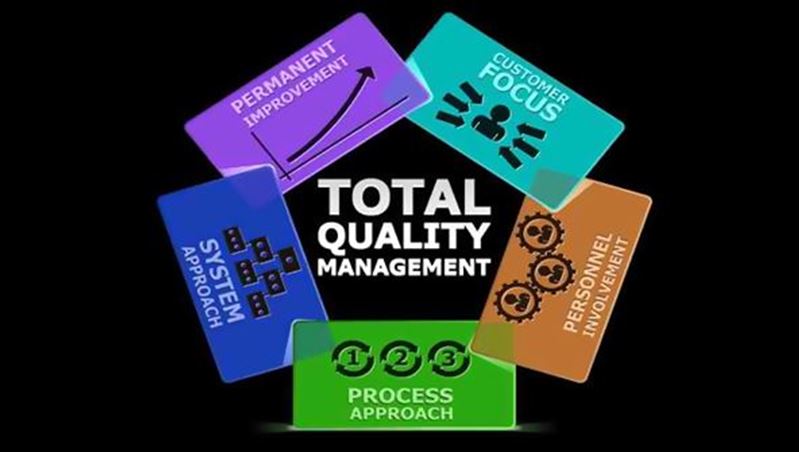
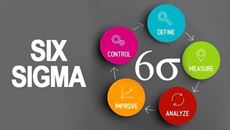
In our first lesson, we'll discuss the concept of professional quality certification as defined by the American Society for Quality (ASQ). Next, we'll come up with a universal definition of quality, a challenging proposition because so many people have different perspective of what quality is and what it isn't. You'll learn about the history of the quality movement and see how Six Sigma fits in. We'll finish up by examining Total Quality Management (TQM) and discuss its concepts and components.

Quality is best viewed as a total customer satisfaction package. You satisfy customers by effectively combining products and services. To help you get to know customers better, we'll discuss different customer types. We'll also discuss how you can minimize customer complaints. You'll discover the role that your organization plays in providing high customer satisfaction by maintaining a quality philosophy and creating quality systems.

I've often observed that companies don't pay enough attention to problems until they begin to see sales and profits drop. Because of this tendency, an effective way to get top management's attention and hopefully increase their commitment to quality is to express problems in terms of costs. In this lesson, I'll discuss the cost of nonquality (also called the "cost of quality") and its components—external failure, internal failure, appraisal, and prevention costs. We'll also explore the concept of variation and discuss how you can use statistical process control (SPC) to meet customer requirements.

Companies grow by entering new markets and meeting unmet customer needs. To achieve and maintain this growth, it's important to have a healthy organization that has the right mix of leadership and power. Today you'll learn about the basic leadership styles and two leadership models. You'll also discover how the concepts of distinctive competency, competitive advantage, and organizational assessment position your organization for success.

In today's lesson, you'll learn what makes people tick and how to manage change. Reaching quality levels you desire will require dedication from everyone in the organization, so you need to know what motivates people in order to successfully work with and direct them. Also, as you work with people, you're faced with change. We'll talk about forces for change, learn why people resist these forces, and discuss ways to manage change.

It seems as if teams are everywhere. Despite the popularity of teams, far too many people report that their experience hasn't been too fulfilling. Six Sigma and quality projects rely on high-performing teams, so it's vital that you learn the secrets of team building. Many companies fail to devote enough time to training. After we complete today's lesson, I hope you'll be able to play a large role in making sure that employees receive the right type of preparation. When we finish, you'll have a solid understanding of how to build a strong team and effectively deliver training.

When companies decide to improve quality and better satisfy customers, they won't succeed unless all employees are behind these goals. Once you get employee commitment, you need to measure your progress. In this lesson I'll share a concept, "total employee involvement" (TEI), to help you get the most from the total power of every single person at your firm. You'll learn about the role that management and employees play in TEI. You'll also learn how to determine progress by using traditional and progressive performance measurements.

Standards and auditing work hand-in-hand. The first helps you plan and the second makes sure that you follow your plans. Firms that conform to standards are more capable of competing. In this lesson, we'll explore the basics of standards and auditing. We'll talk about how standards are used and how they're developed. We'll also explore their benefits and discover how they're defined. Regarding auditing, we'll examine their features, discuss the different types of audits, and look at why auditing is a challenging activity.

In this lesson, we'll explore how your firm can use external auditing to assess suppliers' capabilities and internal auditing to improve company operations. You'll learn the difference between external and internal auditing. And I'll share the nuts and bolts of auditing and show you how to plan and conduct an audit and write a final audit report.

I believe that ISO 9000 is one of the main reasons why organizations continue to focus on quality. It's difficult for companies to disregard quality once they make a decision to adopt the ISO 9000 standard. In today's lesson, we'll start out with some background about ISO, discuss what ISO 9000 represents, identify the challenges of implementing it, and go over a recipe for successfully putting ISO in place. We'll also talk about each section of the ISO 9001:2000 standard.

In this lesson, we'll tackle a number of topics that will increase your knowledge about quality standards and systems. Although ISO 9000 has a high profile, other methods and structures also play a vital role in quality improvement. First, we'll close our study of ISO by looking at a series of standards to manage the environment—ISO 14000. Next, we'll dive into the Malcolm Baldrige National Quality Award (MBNQA), an esteemed award given for quality excellence in the United States. Finally, we'll explore three systems that apply to many of you: QS-9000, the Advanced Quality System (AQS), and the Conformité Europeenne (CE) mark.

After you implement everything from the lessons of this course, you can safely say your organization has a quality culture. Without a quality culture, it's difficult to satisfy customers, improve processes, and reduce costs. In addition to discussing a quality culture, we'll also examine quality fallacies. We'll finish up the lesson by identifying the most common quality fallacies and discuss what beliefs should take their place.

Tony Swaim

Tony Swaim

Tony Swaim has helped many clients, colleagues, and students reach their professional and personal goals. He has been an online instructor since 1998 and has taught at colleges and universities across the United States since 1981. His focus areas ... Read more

Read Tony Swaim's Profile

Frequently Asked Questions

Once you've made the payment, we'll send you a confirmation email with a link to start your course. Feel free to get started whenever you're ready!

You'll have 3 months access to your course. In that time you are free to study at your own pace. The course duration is 24 hours.

Online learning is a flexible way to study that fits around your schedule, giving you the freedom to learn at your own pace from anywhere in the world. You'll have 3 months to complete the course and can take the multiple-choice questions and final exam whenever it suits you.

If you need help, you can contact us anytime. You can also join the discussion area where you can interact with other students. The discussion area for each lesson is open for the entire duration of the course.

Of course! We offer a 7-day money back guarantee. As long as you haven't completed the course, you can get a full refund within 7 days of enrolling.

We do not offer extensions or transfers for this self-paced course. However, you will have 3 months to complete the course, and if you need to cancel within the first 10 days of enrolment, we offer a money back guarantee.

The Learning Environment

From the moment that you enrol in the Total Quality Fundamentals you will become an integral part of our learning community. You'll find yourself with the freedom to learn at a speed that suits you, on any device, from anywhere in the world. Achieving your career goals no longer has to mean compromising family and work commitments.

Ready to get started?

Enrol Now

Our Values

Learn At Your Own Pace

We believe in personalised learning. That's why we provide all the tools and support you need to succeed at your own pace. With flexible learning, you'll stay motivated and retain more information. Plus, you can balance your studies with work and family commitments to make your dreams a reality.

We Won't Break The Bank

Education should be accessible to anyone who wants to learn. That's why we offer some of the most competitive prices in the industry with payments plans for just $25 per week. Investing in your future is a smart choice and doesn’t have to break the bank.

Industry-Led Courses

There's no better way to learn than from experts with years of experience in your field. That's why each of our 200+ industry-led courses are designed to give you a real-life perspective on your industry. With our expert mentors, you'll learn from people who have a wealth of knowledge and experience, and who are passionate about sharing it with you.

Get The Personal Support You Deserve

At Vibe Learning, we're real people who are dedicated to providing you with personal support every step of the way. Our industry experts are not only professional and knowledgeable but also incredibly passionate about sharing their expertise with you. With their guidance, you'll gain invaluable insights and practical knowledge to help you succeed.